Saturday, 10 November 2012

A paramilitary police officer stands guard during ''China's manned spacecraft'', at an exhibition related to Shenzhou-9 at Shanghai Science and Technology Museum in Shanghai November 2, 2012. REUTER/Aly Song
(Reuters) - China plans to launch its Shenzhou 10 spacecraft in early June 2013, one of the senior officials in charge of the manned space programme said on Saturday, the official Xinhua news agency reported.
The launch marks another step forward in Beijing's ambitions for a bigger presence in space that include the construction of a space station by 2020.
The crew could include one female and two male astronauts, who are scheduled to enter the Tiangong 1 space lab module, according to Niu Hongguang, deputy commander-in-chief of China's manned space programme.
Niu made the remarks on the sidelines of the Communist Party congress which is meeting to choose a new leadership.
The new plan follows the successful flight of the Shenzhou 9 spacecraft, which returned to Earth in late June, that put China's first woman in space and completed a manned docking test critical to Beijing's space station plan.
China is far from catching up with the established space superpowers, the United States and Russia, but the Shenzhou 9 marked China's fourth manned space mission since 2003, and comes as budget restraints and shifting priorities have held back U.S. manned space launches.
The United States will not test a new rocket to take people into space until 2017, and Russia has said manned missions are no longer a priority.
China plans an unmanned moon landing and deployment of a moon rover and its scientists have raised the possibility of sending a man to the moon, but not before 2020.

Wednesday, 7 November 2012

Sriharikota (Andhra Pradesh),
India today successfully launched its 100th space mission with the indigenous PSLV-C21 rocket putting in orbit two foreign satellites
.
In a copybook launch, witnessed by Prime Minister Manmohan Singh, ISRO's workhorse PSLV placed in orbit France's SPOT 6 satellite and Japanese spacecraft PROTIERES, some 18 minutes after a perfect lift off from the Satish Dhawan Space Centre here.

The launch, scheduled for 9.51 AM, was delayed by two minutes at the end of the 51-hour countdown. The Polar Satellite Launch Vehicle (PSLV), on its 22nd flight, soared into an overcast sky at 9.53 AM carrying the 720 kg French satellite, the heaviest satellite to be launched by India for a foreign client.

The mission was described as "a spectacular success" and a milestone by Singh, who keenly watched the entire launch sequence and applauded each stage separation culminating in the placing of the two satellites in orbit.

The launch was a landmark for Indian Space Research Organistion (ISRO) which began its space odyssey on a humble note when it launched the indigenous 'Aryabhatta' on board a Russian rocket on April 19, 1975. 

The launch has yet again demonstrated the versatality and robustness of PSLV with the rocket completing its 21st successful mission in a row since its first failed flight in September 1993.

No Indian satellite was onboard today's flight which is the third wholly commercial launch undertaken by ISRO for foreign clients. SPOT-6 is the biggest commercial lift so far since India forayed into the money spinning commercial satellite launch services after 350 kg Agile of Italy put in orbit in 2007 by PSLV. Twelve other foreign commercial satellites launched by ISRO weighed below 300 kg.

Significantly, France's five earlier SPOT satellites were launched by European Araine rocket. SPOT-6, built by ASTRIUM SAS, a subsidiary of EADS, France, is an earth observation satellite, while the micro satellite PROITERES, developed by students and faculty of Osaka Institute of Technology, will study Kansai region of Japanese island of Honshu.

Sunday, 4 November 2012

Scientists have introduced a new idea in the long running discuss about how the Moon was formed. In current years, scientists' best guess for how the Moon formed has been that a comparatively slowly stirring, Mars-sized body called Theia stopped into the very young Earth. While the exact facts of the impactor's size and velocity has remained doubtful.


In an online report to be published in Icarus, researchers propose that the crash happened with a much larger, earlier body than formerly thought. Such theories want to line up with what we discern regarding the Moon, about the violent processes that set off the formation of moons, and what processor simulations show about the more sedate gravitational gathering-up that finishes the job. According to scientists reporting in Nature Geoscience, fresh analysis of solar samples taken by the Apollo missions showed that the Moon and the Earth shared an uncannily comparable isotope ratio of the metal titanium.

Saturday, 3 November 2012


A pillar of physics - that nothing can go faster than the speed of light - appears to be smashed by an oddball subatomic particle that has apparently made a giant end run around Albert Einstein's theories.
Scientists at the world's largest physics lab said Thursday they have clocked neutrinos traveling faster than light. That's something that according to Einstein's 1905 special theory of relativity - the famous E (equals) mc2 equation - just doesn't happen.


The Chicago team had similar faster-than-light results in 2007, but those came with a giant margin of error that undercut its scientific significance.

Other outside scientists expressed skepticism at CERN's(European Organization for Nuclear Research) claim that the neutrinos — one of the strangest well-known particles in physics — were observed smashing past the cosmic speed barrier of 186,282 miles per second (299,792 kilometers per second).


CERN says a neutrino beam fired from a particle accelerator near Geneva to a lab 454 miles (730 kilometers) away in Italy traveled 60 nanoseconds faster than the speed of light. Scientists calculated the margin of error at just 10 nanoseconds, making the difference statistically significant. But given the enormous implications of the find, they still spent months checking and rechecking their results to make sure there were no flaws in the experiment.

Wednesday, 24 October 2012

http://www.climatepedia.org/images_pedia/greenland-ice-sheet.jpg
Ice-sheet retreat can halt temporarily during long phases of climate warming, according to scientists. A UK team led by Durham University has found that the geometry of channels beneath the ice can be a strong control on ice behaviour, temporarily hiding the signals of retreat.
The findings, which provide the first simulation of past ice-sheet retreat and collapse over a 10,000-year period in Antarctica, shed new light on what makes ice stable or unstable and will help refine predictions of future ice extent and global sea-level rise, the researchers say.
The International Panel on Climate Change (IPCC) has stated that one of the main challenges in predicting future sea-level rise is to quantify and model the interactions between evolving ice sheets, oceans, sea level and climate. Significant efforts have been made over the last decade to develop computer models and collect data in order to reduce uncertainties and understand the potential impacts under scenarios of future climate change.
The results of the new research from Durham University, the University of Sheffield, the University of Cambridge, and the British Antarctic Survey are published in the journal Nature Geoscience.
Lead author Dr Stewart Jamieson, a glaciologist at the Department of Geography, Durham University, said: "Our research shows that the physical shape of the channels is a more important factor in controlling ice stability than was previously realised. Channel width can have a major effect on ice flow, and determines how fast retreat, and therefore sea-level rise, can happen.
Although climatic and oceanic changes are crucial drivers of ice loss, the research shows that the landscape below the ice strongly controls the speed of any retreat.
Dr Jamieson said: "Our results suggest that during an overall phase of retreat an ice stream can appear almost stable when in fact, in the longer-term, the opposite may be the case.
"Getting a clearer picture of the landscape beneath the ice is crucial if future predictions of change in the ice-sheets and sea level are to be improved."
Marine-based ice streams are the fast flowing arteries of ice sheets, draining approximately 90 per cent of the ice that reaches the sea. They flow through large channels where the ice can move thousands of metres in a year. According to the scientists, the unpredictable nature of ice streams makes forecasting ice-sheet retreat extremely difficult. If ice streams speed up they can cause sea level to rise.
Durham University co-author Dr Chris Stokes said: "Ice streams are like taps filling a bath, but the problem here is that we do not know if something is suddenly going to turn them up or even turn them down."
Satellite imagery from the last 20 years has led to advances in our knowledge of ice sheet stability and has shown that many ice streams are getting thinner and retreating because the ocean and climate are warming. The new research shows that ice behaviour over thousands of years can successfully be simulated in places where ice streams meet the sea.
The researchers looked at the landscape of the seafloor in Marguerite Bay, in the Antarctic Peninsula, and saw that during a rapid phase of recession 13,000 years ago, retreat paused many times. Using a computer model designed to work in situations of rapid change, they found they could reproduce the same pattern in a series of simulations. These showed that ice dragged on the sides of the channel more where it was narrow, causing retreat to slow and in places temporarily stop for decades to centuries before retreat continued.
Many ice streams are found in channels with beds that are below sea level and that deepen inland. Current theory suggests that ice loss can increase rapidly in deeper water, but the new findings show that channel width plays a crucial role and that narrow bottlenecks in the landscape beneath the ice can cause retreat to slow down.
Dr Andreas Vieli, Department of Geography, Durham University, said: "We can see from our simulations and from new maps of the ocean floor that these bottlenecks occur in the same place as pauses or slowdowns in past ice retreat. This means we should look more closely at the shape of the bed underneath Greenland and Antarctica to better understand how ice might retreat in the future."
The researchers say that understanding ice-stream behaviour and the rate of mass loss from ice sheets and glaciers is essential.
DrClaus-Dieter Hillenbrand, from the British Antarctic Survey, said: "Knowledge of the factors influencing stability and retreat of ice streams is of particular concern because significant portions of the West Antarctic and Greenland ice sheets are currently losing mass that contributes significantly to sea-level rise. Our model results help to explain the apparently time-transgressive retreat of ice streams around Antarctica following the last ice age."
The research was financially supported by the Natural Environment Research Council, UK.


Smallpox is a highly contagious and disfiguring disease that killed around a third of the people it infected – a third of the Europeans, that is. Amongst Native American tribes like the Piegan, Cherokee and Mandan, susceptibility and death rates were much higher, and the disease was nothing short of a devastating social catastrophe.
It’s estimated that, during the 1770s, smallpox killed 30% of the total population of the Northwest Coast of America, yielding a body count in the tens of thousands. And from 1770 to 1850, smallpox, measles and influenza killed at least two thirds of the original population of Western Washington.
All in all, from 1500 to 1900, introduced diseases like smallpox, measles and typhoid killed around 1,500,000 Native Americans. It’s therefore probably not an exaggeration to say that these epidemic diseases helped pave the way for Europeans to conquer the New World.

9. Third Cholera Pandemic 1846-1863

Before the development of purification techniques, water supplies were frequently the source of devastating epidemics. And cholera, a water-borne bacteria originating from India, was often the culprit when it came to global outbreaks. The disease enters the body through drinking water and kills its victims through severe diarrhea, vomiting and dehydration.
One of cholera’s most devastating spells occurred from 1846 to 1863. The infection spread from India to Afghanistan in 1839, and then there were sporadic outbreaks over the next six years before it reappeared in India and the Middle East in 1845. It worked its way across the world to Russia, where it is estimated that it caused at least a million deaths. And by 1848, it was wreaking havoc on Europe. In 1854, more than 23,000 died in Britain alone. It seemed no one was safe, as the disease hit Africa and made its way through the Americas as well.
On the other hand, the London cholera outbreak also played an important role in the founding of epidemiology. In 1854, physician John Snow analyzed cholera’s fatalities and noticed that a large number of cases in Soho were clustered around the pump in Broad Street.
He concluded that the pump’s water was somehow contaminated with “cholera poison” and requested that the local authorities remove its handle. This was one of the first times that modern methods like statistics had been used to combat a disease outbreak. As such, John Snow has been dubbed the “father of modern epidemiology.”

8. Asian Flu 1856-58

The 1956-1958 Asian flu pandemic was less lethal than the Spanish flu outbreak of 1918, but it still racked up a considerable death toll. The strain, known as H2N2 influenza, is thought to have originated from a mutation in wild ducks that mixed with a preexisting human strain. It was first reported in 1956, in a Guizhou, a province of the People’s Republic of China.
The illness made its way to Singapore in February 1957 and within months spread to Hong Kong and the US. By September it had infected India, northern Australia, the Philippines, the UK and continental Europe.
The first waves of the disease infected large numbers of school children. It was estimated that in 1957, 50% of British school children were infected with the virus. In residential schools in the UK, attack rates reached a staggering 90%, and the disease often made its way through an entire school in a couple of weeks.
Worldwide deaths from the outbreak were estimated at around two million. And the fact that a strain of common influenza could cause so many casualties illustrates just how dangerous such a simple disease can be in a global context.

7. Antonine Plague 165-180

The Antonine Plague was a devastating epidemic that made a major contribution to the decline of the Roman Empire. This deadly disease raged for 15 years, from 165 to 180, wiping out up to one third of the population in many areas and filling the streets with bodies faster than they could be buried.
Symptoms of the disease included fever, diarrhea and inflammation of the throat, and it was frequently deadly. Although the great Greek physician Galen was present during the plague, his descriptions are sketchy and it is therefore difficult to say exactly which virus was responsible. Most historians, however, agree that the culprit was either measles or smallpox.
Total deaths from the epidemic are estimated at around five million. And due to the combined effects of other outbreaks, such as the Plague of Cyprian, the shrinking population couldn’t produce the military or economic might to sustain the Western Roman Empire. By the third century, the capital city was no longer providing strong central government, and from then on, Imperial power could only go downhill. Just to think: the disintegration of Rome’s global empire, all caused by a handful of germs.

6. Thirty Years’ War Typhus/Plague Epidemic 1618-1648

As in many conflicts, more people died from disease in the Thirty Years’ War than on the battlefield. And events like the movement of soldiers across national boundaries and the overcrowding of refugees in cities allowed the illness to quickly infect a large number of victims.
Soldiers dealing with the unsanitary conditions of 17th-century warfare were perfect hosts for lice – parasites that spread typhus through the ranks of troops. The symptoms of the disease include shivering, chills, nausea, vomiting, and pain in the head, back and chest.
Without medical treatment, typhus was often fatal. It is estimated that around eight million Germans died either from typhus or bubonic plague during the war. Typhus is also infamous as a major cause of the deaths in Nazi concentration camps and for decimating Napoleon’s army when he invaded Russia in 1812.

5. Third Plague Pandemic 1855-1959

This last great bubonic plague epidemic was responsible for more than 12 million deaths. The disease had been endemic in India for much of the 19th century, but it only reached disaster status when it spread to the Chinese province of Yunnan in 1855.
Tens of thousands of Chinese citizens died, and when the bacteria reached the port cities of Hong Kong and Guangzhou in 1894, it was able to spread across the world. The infected regions included cities as diverse as Bombay, Cape Town and San Francisco. India was especially badly affected and, together with China, accounted for the bulk of the fatalities.
Advances in medical understanding eventually halted the pandemic: germ theory helped doctors to isolate the virus, and early antibiotics, such as sulfa drugs and streptomycin, allowed them to treat it. It would be the final ride for the bubonic plague’s grim reaper.

4. Plague of Justinian 541-542

Four hundred years after the disaster of the Antonine Plague, the Roman Empire (this time the Eastern Empire) was again crossed by the shadow of an epidemic. Rats in a grain shipment from Egypt brought bubonic plague into the Imperial capital of Constantinople, and around half of the population of the city was killed before the bacteria broke out and continued to spread.
As with the Antonine Plague before it, the pandemic would squelch the Byzantine Empire’s burgeoning Imperial power. The disease weakened Constantinople’s forces at a critical point and allowed the Goths to reclaim the initiative and prevent emperor Justinian from reuniting the Eastern and Western Roman kingdoms. The plague’s final death toll is estimated to have been between 25 and 100 million people in Europe and Asia.
This disease was a recurring nightmare for the Byzantine Empire, but after its last eruption in 750 AD, it seemed to be gone forever. Nevertheless, bubonic plague would reappear 600 years later in a truly nightmarish fashion…

3. HIV/AIDS 1981-Present

A deadly epidemic is occurring right now in the Third World. HIV (Human Immunodeficiency Virus) is a mostly sexually transmitted condition that normally does not show any symptoms for a prolonged period of time. Other causes include contaminated blood, infected needles, and mother to child transmission during breastfeeding and pregnancy.
After coming out of latency, the virus causes sufferers to develop AIDS (Acquired Immunodeficiency Syndrome), which prevents the victim’s immune system from fighting disease and generally leads to death from infections or cancer.
The condition was first observed in America in 1981, but it has since spread across the world. AIDS is particularly common in Sub-Saharan Africa, where as many as 15% of the population are infected in some areas. Since its discovery, HIV/AIDS has caused between 25 and 30 million deaths. There’s a reason governments spent most of the 1980s trying to promote safe sex.

2. Spanish Flu 1918-1919

By 1918, millions of people had died in WWI. Yet an even more devastating event was about to ravage the world – a lethal disease which would kill between 50 and 100 million people, quite a few times the number who died in combat during the war.
The so-called Spanish flu was an influenza virus, similar to the common seasonal flu but considerably more deadly. In those severely affected, it caused the skin to turn blue, violent coughing that sometimes tore abdominal muscles, bleeding from the mouth and nose, incontinence, and vomiting. The virus was particularly dangerous to the young and seemingly healthy. And in some cases, victims were reported to die in a matter of hours.
Spanish flu first appeared in force in August 1918, simultaneously attacking the port cities of Boston (USA), Brest (France) and Freetown (Sierra Leone). The virus quickly spread around the world thanks to air and ocean travel, overwhelming doctors and nurses, who were often forced to erect temporary tents to deal with the sheer number of patients. At the height of the outbreak, it is estimated that over 500 million people were infected with the disease.

1. Black Death 1338-1351

black death
The Black Death is far and away the most lethal epidemic in history. The statistics alone are staggering. The Plague’s 13-year reign across the world resulted in at least 75 million deaths, including at least a third of Europe.
The pandemic originated as a bubonic plague outbreak in China in the 1330s and was then spread by the fleas of infected rats. Symptoms included fever, headaches, nausea, painful buboes and rashes.
The plague was initially restricted to Asia, but trading ships brought the illness to Sicily in 1347. From there it ravaged the continent, causing thousands of deaths a day and prompting people to flee the cities to the safety of the countryside.
The disease killed so many in Europe that it created labor shortages, which increased the demand for peasant workers and therefore raised their standard of living. Ironically, then, even the most deadly epidemic of all time could be seen to have had some kind of bright side.
Throughout history, countless students have taken to the streets demanding changes to the status quo. They have been a voice and a banner-carrier for populations oppressed by strict or repressive government regimes. They have gathered together to demand better and fairer education for all. And they have set themselves up against senseless wars and violence. Bloodshed, injury and death did not deter them. They shook entire countries to the core, brought about much-needed reforms and re-shaped the fabric of entire societies. Here’s a look at 10 of the bloodiest student protests in history.

10. May 1968 Protests, France

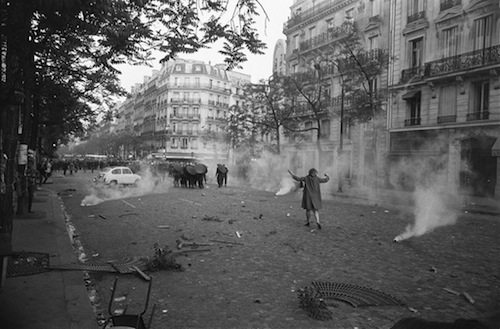
On May 3, 1968, a student protest at the Sorbonne University nearly sparked a revolution. Protesting against the closure of the University of Paris at Nanterre and the planned expulsion of a number of Nanterre students, Sorbonne University students took to the streets en masse. The students, teachers and supporters were also fed up with France’s outdated educational system and the lack of job opportunities for graduates.
Over a period of several days, hundreds of students battled it out with police in Paris’s Latin Quarter, setting up barricades, throwing rocks and braving tear gas. Discontentment with the political and economic conditions in France boiled to the surface, and what started out as a few student protests escalated into a month and a half of utter chaos, during which several people died and hundreds were injured.
Twenty-two percent of the entire working population went on strike, demanding concessions for their working conditions and bringing the capitalist government to the verge of collapse. Despite the injuries and bloodshed, the strikes led to a major educational reform bill, better working conditions and higher wages for workers.

9. German Student Movement, 1968

Global unrest was rampant in 1968, and West Germany was no exception. Communist undercurrents were growing, universities were overcrowded, and a faction of the leftist party, under their anarchist-leaning leader Rudi Dutschke, was persuading the majority to take radical action.
More and more students began to go on strike. And things came to a head on April 11, when Dutschke was shot in the head three times by fascist Josef Bachmann, who called Dutschke a “dirty communist pig.” Dutschke sustained serious brain damage that eventually led to his death in 1979.
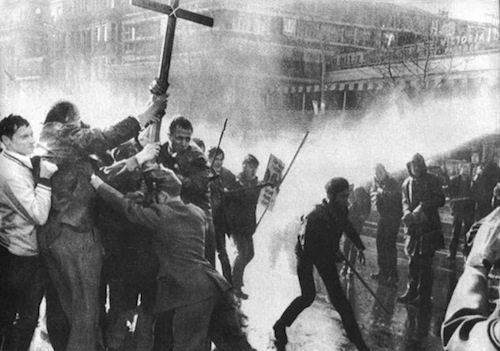
Enraged by the shooting and the Bild newspaper’s message to “eliminate the troublemakers,” 50,000 young people took to the streets and prevented the delivery of the newspaper. Police fought back with water cannons and officers on horseback, arresting over 180 students.

8. Student Strike of 1970, USA

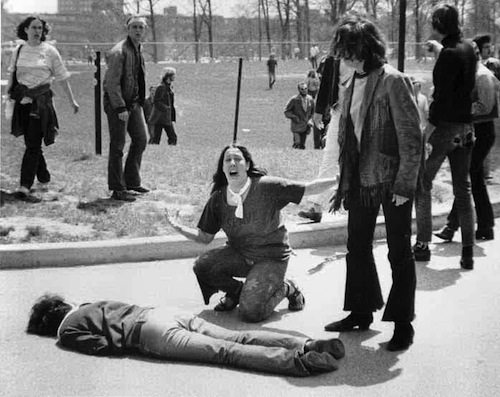
On May 4, 1970, a group of students at Kent State University in Ohio gathered to protest President Nixon’s invasion of Cambodia. Tensions were high, and the Ohio National Guard fired 67 rounds into the unarmed crowd. Four students died, one was paralyzed and eight others were injured. The deaths left the nation stunned, leading to both violent and peaceful protests across the country.
Over 450 educational institutions, from high schools to universities, were closed when a staggering four million students got involved. Mass havoc ensued, with protesters targeting ROTC (Reserve Training Officer Corp) buildings and burning or bombing them.
Protesters turned Washington into an armed camp, slashing tires, breaking windows and pulling cars into intersections. One student described the scenes as a more of “civil war” than a student protest.
Later, even more people were injured when incensed Vietnam War supporters retaliated against the protests.

7. 2011-2012 Chilean Student Protests

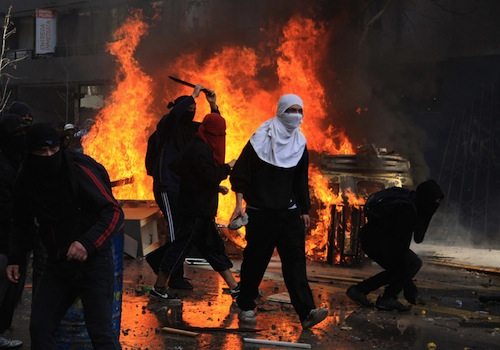
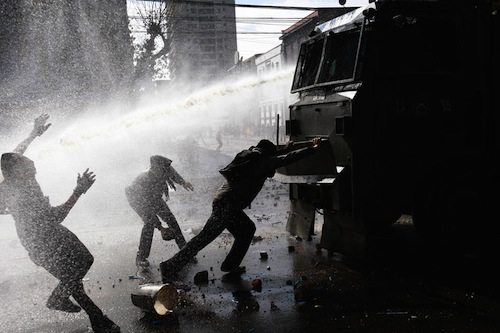
On August 4, 2011, after months of protests, Chilean students rejected President Sebastián Piñera’s proposed education reforms, and the center of Santiago, Chile’s capital city, was declared “a state of siege.” In August alone, 90 military police were injured, 874 protesters were arrested, and an entire department store was burned down.
The blasts of water cannons, empty tear-gas canisters and thousands of furious students characterized the demonstration. Previous protests ran the gamut from pillow-fights and kiss-ins, to throwing Molotov cocktails and rocks at police.
The main goal of these massive strikes was to increase funding for public education: no new public universities have been built in the country since 1990, and these are swamped with a growing number of students seeking higher education.
Deep discontent over these social inequalities has led up to 200,000 students to demonstrate at a time. What’s more, over 500 police have been injured, one student has died, and approximately 1,800 students have been arrested since May 2011. The protests are ongoing.

6. Iran Student Protests, 1999

After a long day protesting against the closure of reformist newspaper Salam, students from Iran’s Tehran University fell asleep in their dormitories. It was July 8, 1999, and social unrest was at an all time high – but things were about to get a lot worse.
A few hours after midnight, the students woke to an unprecedented attack. Plainclothes policemen and a paramilitary faction violently broke into the dorm. They shattered windows, set students’ beds and belongings on fire, and virtually destroyed the dorm. They left many students injured. One student, a visitor to the campus, was killed in the attack.
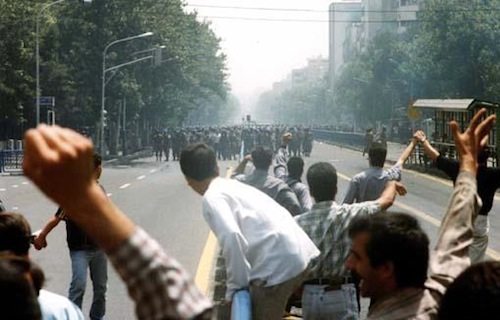
In the aftermath, the protests, which had previously been limited to college campuses, spilled out into the public arena and garnered the support of many ordinary citizens. The focus shifted to protecting student rights and protesting the dormitory attack. Police and vigilantes employed brutal force to crush the demonstrations, beating people with sticks and batons, detaining others and killing at least five.
Some of those who were detained were interrogated and tortured. The protests were crushed after five days. Yet, although they seemed to end in failure, these events laid the foundation for Iran’s independent student movement, which has been active in the country ever since.

5. The Trisakti Shootings, Indonesia, 1998

Four students were shot dead and dozens more were injured by security forces at Trisakti University in Jakarta, Indonesia on May 12, 1998.
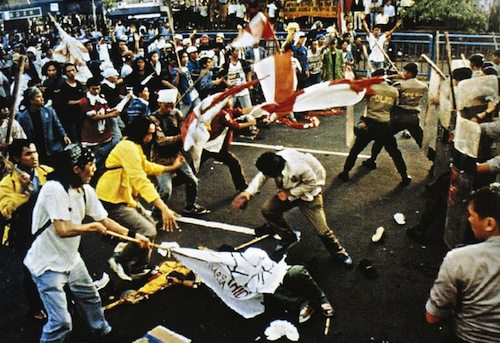
Earlier in the day, 6,000 students, lecturers and staff had gathered to demand that President Suharto resign. The economy in Indonesia was at an all-time low. But although the protest was peaceful, police blocked the demonstrators’ march, forced them back onto the university campus and indiscriminately fired on groups of students.
It may have even been live bullets that were used, although rubber bullets can still be fatal at close range. When the public learned of the killings, they rioted, burning people alive in buildings, looting stores and tearing up lampposts.
Although they’d turned out in protest of the killings, the riots soon turned far more sinister. Rioters began to deliberately target Chinese-Indonesians, resulting in a gut-wrenching 1,200 deaths. President Suharto resigned on May 21, 1998. Although investigation into the shootings remains open, the case has been stalled.

4. Athens Polytechnic Uprising, Greece, 1973

When their strike on November 14, 1973 elicited no response, students from Athens Polytechnic barricaded themselves inside the university, building a radio station using supplies from a laboratory. They broadcast across Athens, urging the people of Greece to join them in their stand against the military junta and dictatorship.
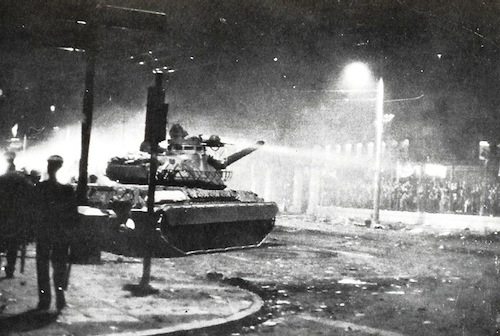
Thousands answered the call, gathering inside and around the university, in open counter-government revolt. They paid a high price. In the morning of November 17, 25 tanks rolled onto the streets and set themselves up in front of the University. Students requested permission to evacuate, but before the allotted time was up, one of the tanks crashed right through the front gates.
Others tried to flee and were taken out by nervous military snipers on the rooftops. The death toll came to at least 24, with hundreds more suffering injuries, and as many as 1,000 people were arrested. Within a year, the military junta had toppled and Greece celebrated free elections.

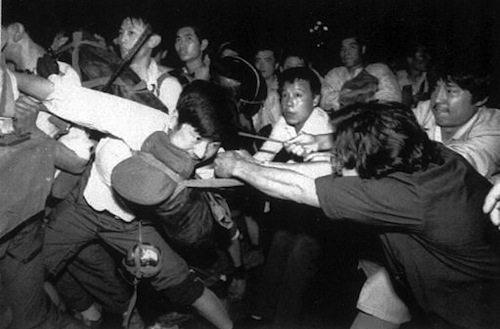
3. Tiananmen Square Protests, China, 1989

The Tiananmen Square Massacre is one of the most well-known and iconic student protests in history. On April 21, 1989, as many as 100,000 Chinese students poured into Tiananmen Square. And when an April 26 government editorial denounced their protests as “rioting,” students demanded that the editorial be retracted.
Students insisted their protests were patriotic and were afraid that the term “rioting” would result in government repercussions. Next, students organized hunger strikes and soon won the sympathy and support of thousands of students from the provinces, as well as other citizen groups. And at the peak of the gatherings, 500,000 protestors gathered in the square.
Meanwhile, the government leaders were in turmoil. They believed that to back down would be “a fatal show of weakness.” Seven weeks later, matters were getting desperate, martial law was instated and the People’s Liberation Army was ordered to clear the square.
On June 3, 1989, the 27th and 38th divisions of the PLA (brought in from the surrounding provinces) moved in and fired tear gas to break up the crowds. Troops were told not to shoot at the demonstrators, and most of them didn’t even carry guns.
The protestors, however, dug in and set up barricades. They threw rocks and, according to one source, “burned tank crews inside their tanks.” That night, the army returned, this time fully armed, shooting live weapons and famously crushing civilians under their tank treads. Fatality estimates range from the hundreds to the thousands.

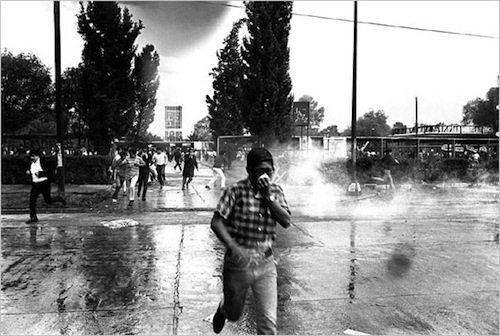
2. Tlatelolco Massacre, Mexico, 1968

October 2, 1968 was a tragic day for Mexico. The country was gearing up to host the 1968 Summer Olympics, and protestors, most of them students, had been using the months leading up to the games to attract the world’s attention to their repressive government. Their demands included the sacking of the police chief, independence for universities and the freeing of political prisoners.
As many as 10,000 students gathered in Plaza de las Tres Culturas in the Tlatelolco district for another day of planned peaceful protest. And although the rally was initially peaceful, the government immediately stationed military vehicles in the plaza.
Flares were fired into the sky and troops began to fire on the crowd. They may have even employed snipers to shoot the unarmed students and civilians below, at least 44 of whom were killed – although some estimates range between 200 and 300. It’s believed that as many as 1,345 people were arrested.
People fled into nearby houses and apartments, but the military searched house by house for survivors. Tragically, not all of the victims of the massacre were even protestors. A lot of people were just passing through, in the wrong place at the wrong time.

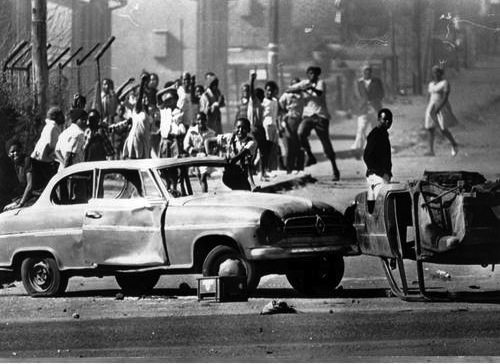
1. Soweto Uprising, South Africa, 1976

In 1974, the South African Department of Education decreed that Afrikaans was to be used in schools. It was given equal standing with English and placed over the native Bantu languages of the black population. Many African teachers couldn’t even speak Afrikaans, and students found their grades declining. Worse still, Afrikaans was closely tied to Apartheid and was considered the “language of the oppressor.”
On June 16, 1976, thousands of students walked out of their classrooms and headed for the Orlando Stadium, to take part in a rally planned by the Soweto Students’ Representative Council’s (SSRC) Action Committee. They were unarmed and mostly peaceful, although a few threw rocks.
When one policeman fired his gun, everyone panicked. Police set their dogs on the children, who reacted by stoning the attacking dogs to death. So, the police began firing directly into the crowd, killing at least two students and injuring hundreds more, stirring the crowd into a frenzy of destruction.
On June 17, 1,500 heavily armed police rolled in and patrolled the streets of Soweto on foot, in armored vehicles and from helicopters. The South African army was put on standby, as a show of military force.
The official death toll is generally believed to be 176, but some estimates put the figure as high as 600. Although it would be another 14 years before Nelson Mandela was released from prison, these protests strengthened black resistance, helping pave the way for change.
Powered by Blogger.